


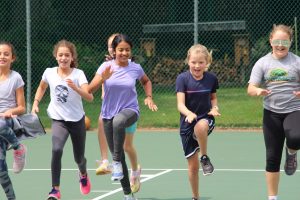
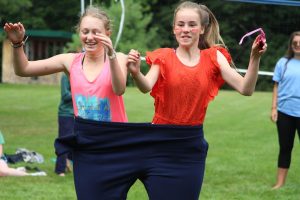
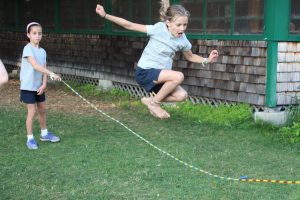
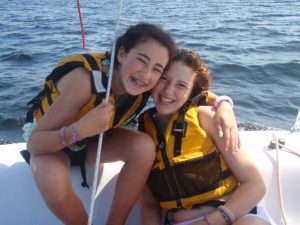
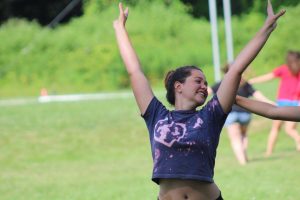
I love seeing girls and counselors grow in their confidence, skills, decision making, problem solving, team work, and self-esteem. One of the simple but critical parts of camp that helps all those things happen is play. We play in organized games and relay races, we play in activities and special events, but the really special play time happens during unstructured time. Girls make up silly games in the cabin, explore camp, jump rope, throw a frisbee, do somersaults, build fairy houses, make costumes, watch clouds, etc. etc. They giggle and tell jokes, they share stories, and create memories. It’s joyful and creative, it’s unplugged fun that sometimes can’t even be explained because it happens organically. When girls play they are learning about themselves and each other and they are tapping into parts of their minds, hearts and bodies that don’t always get the exercise they need.
I played organized sports all through school and was active in clubs and student government, and I loved it, but when I think back to my childhood, the memories that are the most vivid are playing. It didn’t matter if it was building forts, poking around in the woods, playing Kick the Can, jumping in leaves, making crazy things out of bits and pieces, or laying in the grass and seriously discussing Halloween costumes, these were the best times. I was fortunate that this simple play was woven into my life year-round and I wish the same was true for all children today. I know it’s not and I know it is also not the case for many of us as adults.
So yeah for camp – the place where playing is just as important as anything else we do and girls and adults alike are not only encouraged to play but expected to play!
Whys is play is valuable – check here and how about for adults? Check here








 after year.
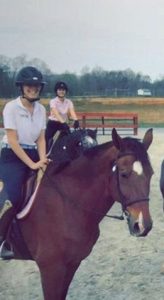 & Wales University Equine Center
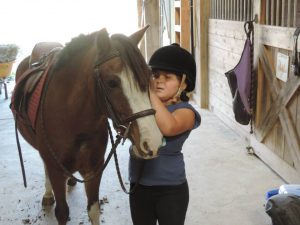
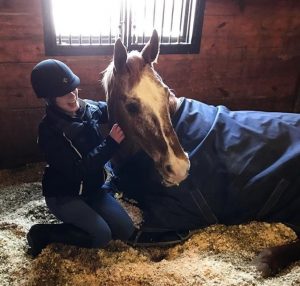 wait to introduce our new campers to our wonderful horses and ponies. Just like you, our horses have been in school all winter long and they are excited for summer. They are well trained, safe, and ready to make 2017 the best summer ever!
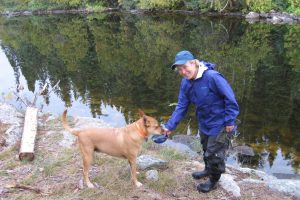 We are fortunate that Marijean “MJ” Parry is at the conference this week, networking and learning to bring back to Runoia. If you haven’t met MJ yet, her introduction is
 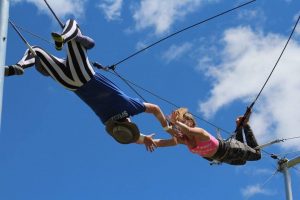 Our professional development doesn’t end with our camp connections. As I grow in my own field of work, I see youth outreach programs that are extraordinary. I am impressed by my childhood friend from Princeton, Jonathan Diamond, founder and director of the Hilltown Youth and Recovery Theatre helping youth through theatre and performing to recover from addiction and/or anxiety and other mental health challenges.
 The images of the
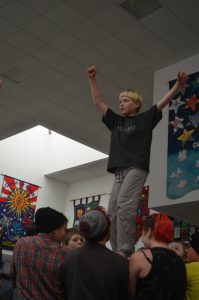 work his program provides are vivid and powerful. Hats off to Jonathan and his team. If you are a person who works in counseling or helps youth with anxiety, addiction or other mental health challenges, I encourage you to check out Hilltown Youth and contact Jonathan if you are interested in more information. jonathan@crocker.com